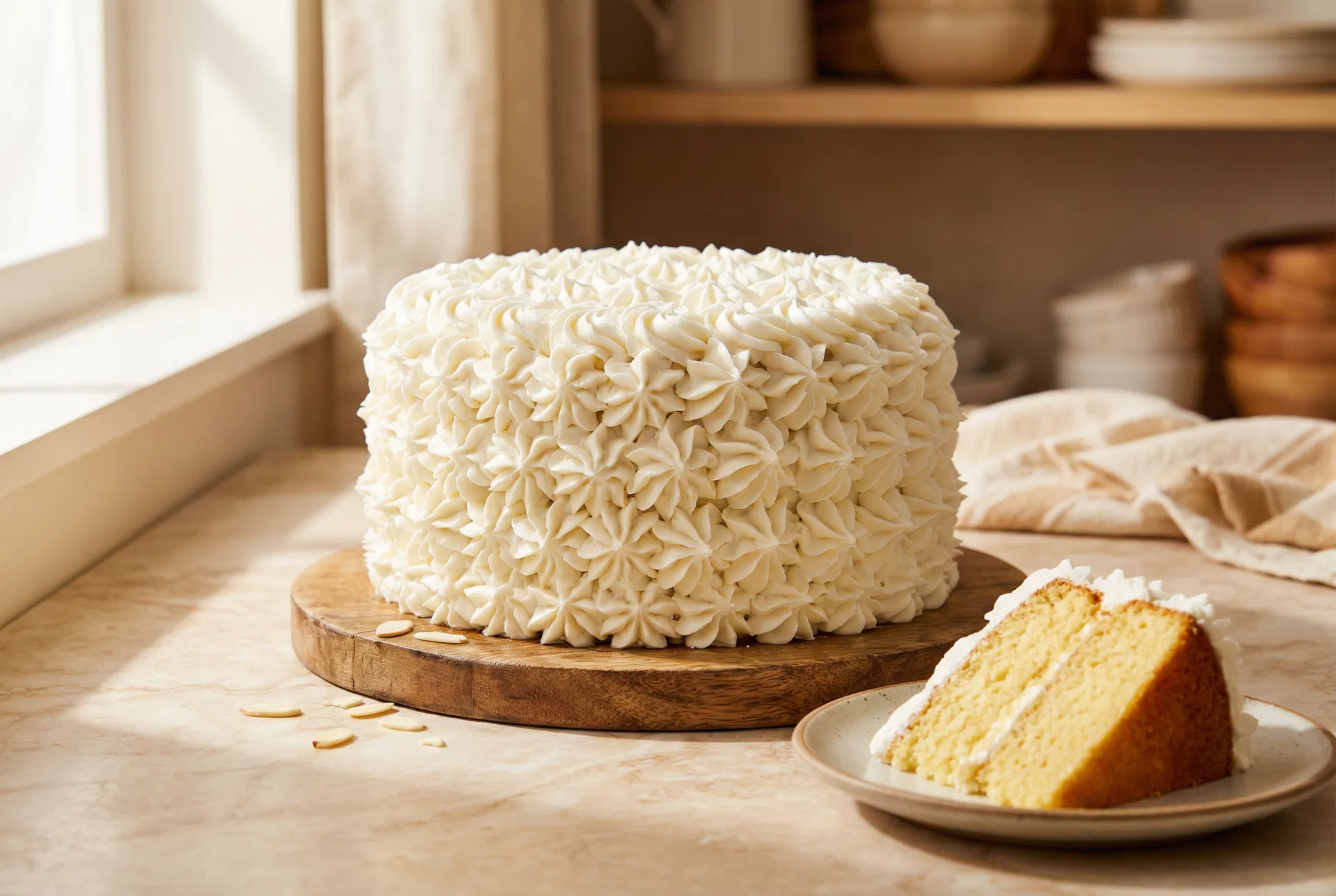
Bizcocho Mojadito: The Complete Guide to Puerto Rico's Most Beloved Cake
Bizcocho Mojadito: The Complete Guide to Puerto Rico's Most Beloved Cake
- By The Baking Bros. | Baking Bros. Blog
"Every Puerto Rican celebration — every birthday, every quinceañera, every wedding — has one thing in common: a bizcocho mojadito on the table."
If you grew up in a Puerto Rican household, you know the smell. That warm, buttery, almond-scented cloud that drifts out of the kitchen hours before a party starts. You know the moment the cake comes out of the oven, glistening as the syrup soaks in. And you know that first bite — impossibly moist, tender, with that unmistakable almond flavor that no other cake in the world quite replicates.
That cake is the bizcocho mojadito puertorriqueño. And we've been making it for over 20 years.
This is not a recipe you'll find explained with real depth anywhere else. Most guides give you the ingredients and the steps, but they skip the why — the technique behind the technique. We're going to fix that. This is the complete guide: the history, the science, the recipe, the troubleshooting, and the frosting. Everything you need to make an authentic Puerto Rican bizcocho mojadito at home.
What Is Bizcocho Mojadito?
The name translates directly: bizcocho means cake, and mojadito means "a little wet." It is a Puerto Rican sponge cake that is soaked — deliberately, generously — in a simple syrup after baking. The result is a cake that sits somewhere between a classic sponge and a tres leches: incredibly moist, but not drowning in liquid. It holds its structure. It layers beautifully. It supports fondant. And it tastes like home.
The cake has three defining characteristics that set it apart from any other cake you've made:
| Characteristic | What It Means |
|---|---|
| Almond flavor | The traditional flavoring is almond extract or almond emulsion — not vanilla. This is non-negotiable for authenticity. |
| Separated egg technique | The egg whites are beaten to stiff peaks and folded in separately, creating a lighter, spongier crumb than a standard pound cake. |
| Syrup soaking | After baking, the cake is soaked with a simple syrup — traditionally made with brandy or white rum — which gives it the "mojadito" quality. |
The History: From Spanish Colonialism to Puerto Rican Tables
The origins of the bizcocho mojadito trace back to the Spanish colonial period in Puerto Rico. When Spain colonized the island in the 16th century, they brought with them the bizcocho de almendras — a dense, dry almond cake designed for long sea voyages. It was shelf-stable, compact, and built to last.
But Puerto Rican bakers, working with local ingredients and the island's tropical abundance, transformed it. They added more butter. They separated the eggs to lighten the crumb. They introduced the syrup soak — likely influenced by the island's rum production — to add moisture and flavor. Over generations, the cake evolved from a practical colonial ration into a symbol of celebration.
By the 20th century, the bizcocho mojadito had become the default celebration cake across Puerto Rico. Birthdays, weddings, quinceañeras, baptisms — no major event was complete without one. It became, and remains, the cake that Puerto Rican families pass down through generations. The recipe lives in handwritten notes tucked into kitchen drawers, in the memory of grandmothers who never measured a thing, and now — in guides like this one.
The Ingredients: What You Need and Why
For the Cake
| Ingredient | Amount | Why It Matters |
|---|---|---|
| Unsalted butter | 1 pound (4 sticks / 454g), room temperature | The fat base. Room temperature is critical — cold butter won't cream properly. |
| Granulated sugar | 2 cups (400g), divided | Half goes into the butter cream, half into the egg whites. |
| Eggs | 10 large, separated | Yolks add richness; whites beaten to stiff peaks create the sponge structure. |
| Self-rising flour | 3 cups (360g), sifted | The leavening is already built in. Don't substitute all-purpose without adding baking powder. |
| Almond extract | 1 tablespoon | The defining flavor of an authentic bizcocho. Use pure extract or almond emulsion. |
| Brandy or white rum | ¼ cup | Adds depth to the batter itself. Can be replaced with lemon juice or vanilla extract. |
For the Brandy Syrup
| Ingredient | Amount |
|---|---|
| Water | 2 cups |
| Granulated sugar | 1 cup |
| Brandy or white rum | ¼ cup (optional) |
For the Traditional Puerto Rican Frosting (Frosting Boricua)
| Ingredient | Amount |
|---|---|
| Vegetable shortening (Crisco) | 2 cups |
| Powdered sugar, sifted | 2 pounds (about 8 cups) |
| Almond extract | 1 tablespoon |
| Heavy cream or milk | 4–6 tablespoons |
A note on the frosting: The traditional Puerto Rican frosting uses vegetable shortening as its base — not butter. This is not a shortcut. It is the authentic technique. Shortening-based frosting is more stable in Puerto Rico's tropical heat, holds its shape longer, and has a distinct texture that is part of the cake's identity. If you want the real thing, use shortening.
The Method: Step by Step
Step 1 — Prepare Your Equipment and Ingredients
Everything must be at room temperature before you begin. This is the single most important preparation step. Cold butter will not cream properly, and cold eggs will not incorporate smoothly into the batter. Take your butter and eggs out of the refrigerator at least one hour before baking.
Preheat your oven to 350°F (175°C). Grease an 8×3 inch round cake pan and line the bottom with parchment paper.
Step 2 — Cream the Butter and Sugar
In a large mixing bowl, beat the butter and 1 cup of sugar together on medium-high speed until the mixture is pale, light, and fluffy. This step should take a full 3 to 5 minutes — do not rush it. You are incorporating air into the fat, and that air is what gives the cake its lift. The mixture should look almost white and feel noticeably lighter than when you started.
Step 3 — Add the Egg Yolks
Add the egg yolks one at a time, beating well after each addition. Make sure each yolk is fully incorporated before adding the next. After all yolks are in, add the almond extract and brandy. Mix until combined.
Step 4 — Add the Flour
Sift the self-rising flour if you haven't already. Add it to the batter gradually, mixing on low speed just until combined. Do not overmix. Overmixing develops gluten and makes the cake tough. Stop as soon as you no longer see dry flour.
Step 5 — Beat the Egg Whites
In a completely clean, grease-free bowl (glass or metal — avoid plastic), beat the egg whites on medium speed until frothy. Add the remaining 1 cup of sugar and continue beating until stiff peaks form. Stiff peaks means the whites hold their shape when you lift the beater — they stand straight up without drooping.
This step is critical. The beaten egg whites are what transform this from a dense pound cake into a light, spongy bizcocho. Take your time.
Step 6 — Fold the Meringue Into the Batter
Using a rubber spatula, fold the beaten egg whites into the cake batter in two additions. Use a gentle, sweeping motion — down through the center, up and over the side. You are trying to keep as much air in the whites as possible. Do not stir. Do not use the mixer. Fold until just combined; a few white streaks are fine.
Step 7 — Bake
Pour the batter into the prepared pan and smooth the top. Bake for 50 to 55 minutes, or until a toothpick inserted in the center comes out clean. Do not open the oven door for the first 40 minutes. Opening the oven causes a temperature drop that can make the cake sink in the center.
Allow the cake to cool in the pan for 10 minutes, then transfer to a wire rack.
Step 8 — Make the Brandy Syrup
While the cake bakes, combine the water and sugar in a small saucepan over medium-high heat. Stir until the sugar dissolves, then bring to a boil. Boil for 5 minutes, then remove from heat. Stir in the brandy or rum (if using). Allow to cool slightly — you want it warm, not boiling, when you apply it to the cake.
Step 9 — Soak the Cake
This is the step that makes it a mojadito. While the cake is still warm (not hot), slowly pour the syrup over the top. Use a squeeze bottle if you have one — it gives you more control and helps distribute the syrup evenly. Pour in stages: add some syrup, wait for it to absorb, then add more. The cake should be noticeably moist but not waterlogged.
For the best results, refrigerate the soaked cake overnight before frosting. This allows the syrup to fully distribute through the crumb and the flavors to meld.
Step 10 — Make the Frosting
Beat the vegetable shortening on high speed for 3 to 5 minutes until it is light and fluffy. Add the almond extract and mix in. Add the sifted powdered sugar gradually, about a cup at a time, mixing on low speed. Add the heavy cream or milk a tablespoon at a time until you reach a smooth, spreadable consistency. Beat on high speed for another 3 to 5 minutes until the frosting is very light and fluffy.
Frost the chilled, soaked cake as desired.
The Baking Bros. Troubleshooting Guide
After 20 years of making this cake, we've seen every problem. Here are the most common ones and exactly how to fix them.
| Problem | Cause | Fix |
|---|---|---|
| Cake sinks in the center | Oven door opened too early; underbaked; too much leavening | Don't open the oven for the first 40 minutes; test with a toothpick; use self-rising flour as specified |
| Cake is dense, not spongy | Egg whites not beaten to stiff peaks; overmixed after adding whites | Beat whites until they hold a firm peak; fold gently, don't stir |
| Cake is dry even after soaking | Overbaked; syrup applied to cold cake | Pull the cake at 50 minutes and test; apply syrup while cake is still warm |
| Frosting is too stiff | Not enough liquid; shortening too cold | Add cream one tablespoon at a time; make sure shortening is at room temperature |
| Frosting is too soft | Too much liquid; room too warm | Add more powdered sugar; refrigerate the frosting for 15 minutes |
| Cake doesn't taste like the real thing | Used vanilla instead of almond extract | Almond extract is the defining flavor — don't substitute it |
Variations: How to Make It Your Own
The bizcocho mojadito is a foundation, not a formula. Once you've mastered the base recipe, here are the most popular variations:
- Alcohol-Free Version. Replace the brandy in the batter and syrup with fresh lemon juice or lemon extract. The citrus brightens the almond flavor beautifully and is a popular choice for cakes served to children.
- Guava Filling. Slice the cooled, soaked cake in half horizontally and spread a layer of guava paste thinned with a little water between the layers. Guava and almond is one of the great flavor combinations in Puerto Rican baking.
- Coconut Variation. Add ½ cup of shredded coconut to the batter and replace the brandy syrup with a coconut milk syrup. This is a popular variation for summer celebrations.
- Cream Cheese Frosting. While not traditional, a cream cheese frosting with almond extract is a delicious modern variation that pairs beautifully with the moist cake.
The Cultural Significance: More Than a Recipe
The bizcocho mojadito is not just a cake. It is a cultural artifact. It is the taste of Puerto Rican celebrations — the smell of a birthday morning, the centerpiece of a wedding table, the thing your grandmother made that no one else's grandmother made quite the same way.
Every Puerto Rican family has their version. Some use more brandy. Some use less sugar. Some add a cherry-flavored syrup. Some frost it with cream cheese. But the core — the almond sponge, the syrup soak, the shortening frosting — that stays the same. It is one of the few things that is genuinely, distinctly Puerto Rican in a way that transcends region, generation, and economic background.
We've been making this cake in Puerto Rican bakeries for over 20 years. We've made it for thousands of birthdays, hundreds of weddings, and more quinceañeras than we can count. And every single time we pull one out of the oven and start soaking it with syrup, it still feels like something special.
That's what we want you to feel when you make this at home.
The Recipe Card
- Bizcocho Mojadito Puertorriqueño
- Serves: 12–16 | Prep: 30 minutes | Bake: 55 minutes | Total: ~2 hours (plus overnight rest)
- Cake: 1 lb unsalted butter (room temp) · 2 cups sugar (divided) · 10 large eggs (separated) · 3 cups self-rising flour (sifted) · 1 tbsp almond extract · ¼ cup brandy or white rum
- Brandy Syrup: 2 cups water · 1 cup sugar · ¼ cup brandy or rum (optional)
- Frosting: 2 cups vegetable shortening · 2 lbs powdered sugar (sifted) · 1 tbsp almond extract · 4–6 tbsp heavy cream
1. Preheat oven to 350°F. Grease and line an 8×3 inch pan. 2. Cream butter + 1 cup sugar until pale and fluffy (3–5 min). 3. Add egg yolks one at a time. Add almond extract and brandy. 4. Fold in sifted flour on low speed until just combined. 5. In a clean bowl, beat egg whites to frothy. Add remaining 1 cup sugar; beat to stiff peaks. 6. Fold egg whites into batter in two additions. Do not overmix. 7. Bake 50–55 minutes. Do not open oven for first 40 minutes. 8. Cool 10 minutes in pan. Transfer to wire rack. 9. Make syrup: boil water + sugar 5 min, add brandy, cool slightly. 10. Soak warm cake with syrup using a squeeze bottle. Refrigerate overnight. 11. Make frosting: beat shortening, add extract, add sugar gradually, add cream to consistency. Beat 3–5 min on high. 12. Frost chilled cake. Serve at room temperature.
- This is the cake that Puerto Rico built its celebrations around. Make it once and you'll understand why.
- — The Baking Bros.
- Baking in Puerto Rico for over 20 years.
Recommended Tools for Bizcocho Mojadito: The Complete Guide to Puerto Rico's Most Beloved Cake
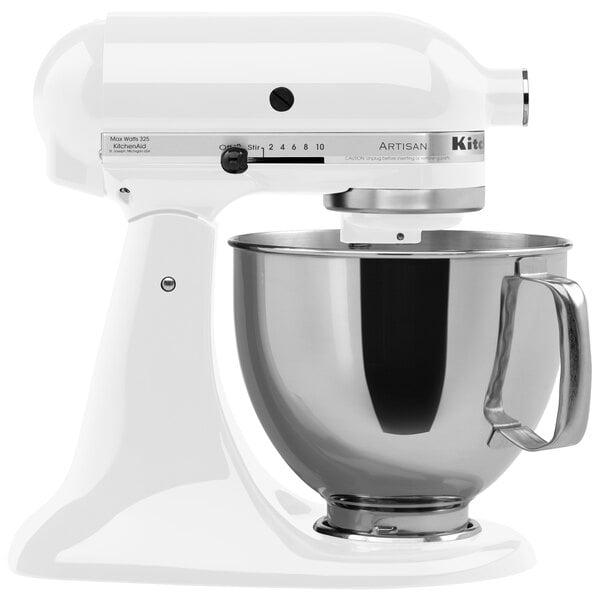
KitchenAid Artisan Series 5-Quart Stand Mixer
The workhorse of our kitchen. It handles dense cake batters and stiff doughs without breaking a sweat. 10 speed settings with coated flat mixing paddle.
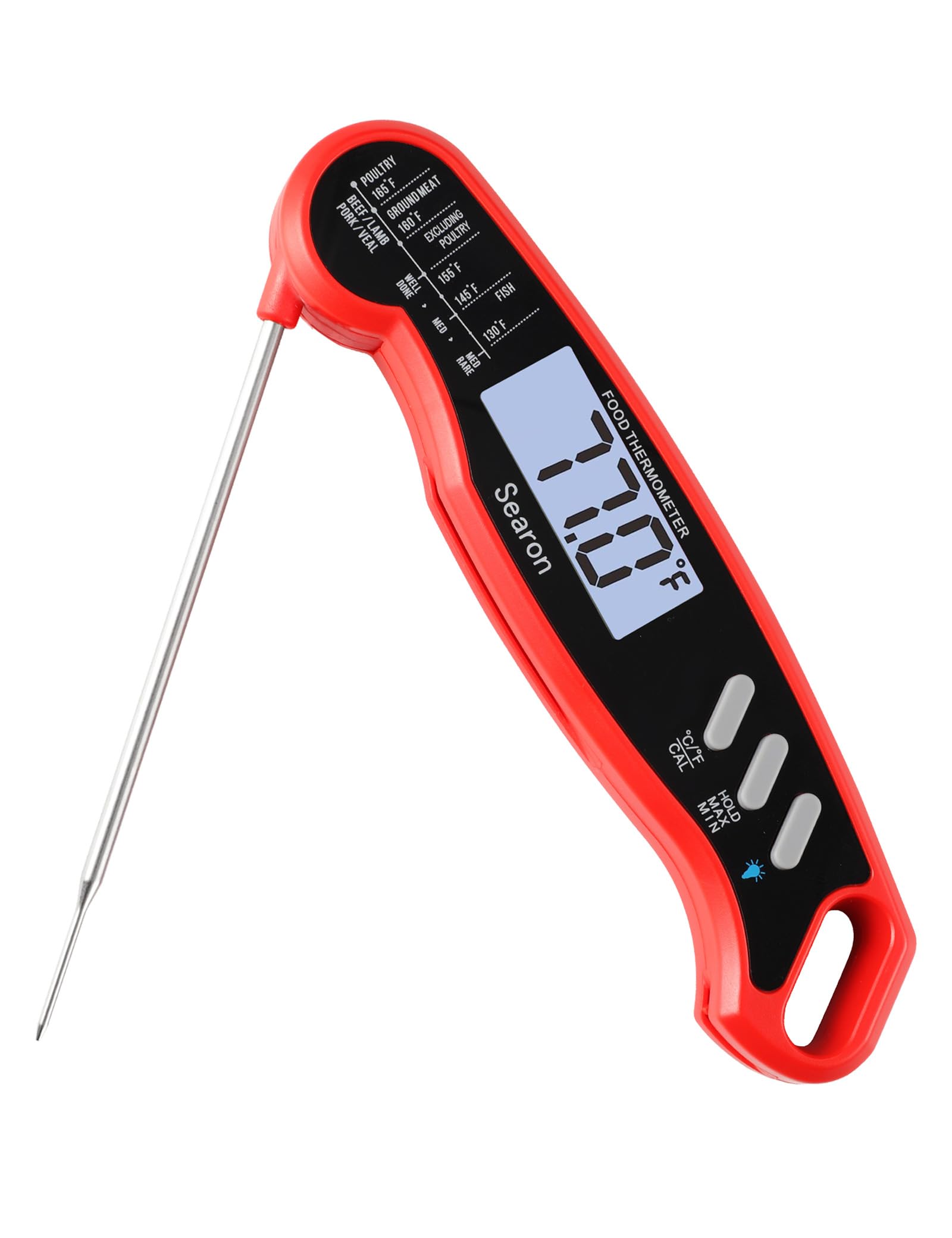
Instant-Read Digital Thermometer
Perfect for checking cake doneness. Fast 2-second read time with backlit display and waterproof design.
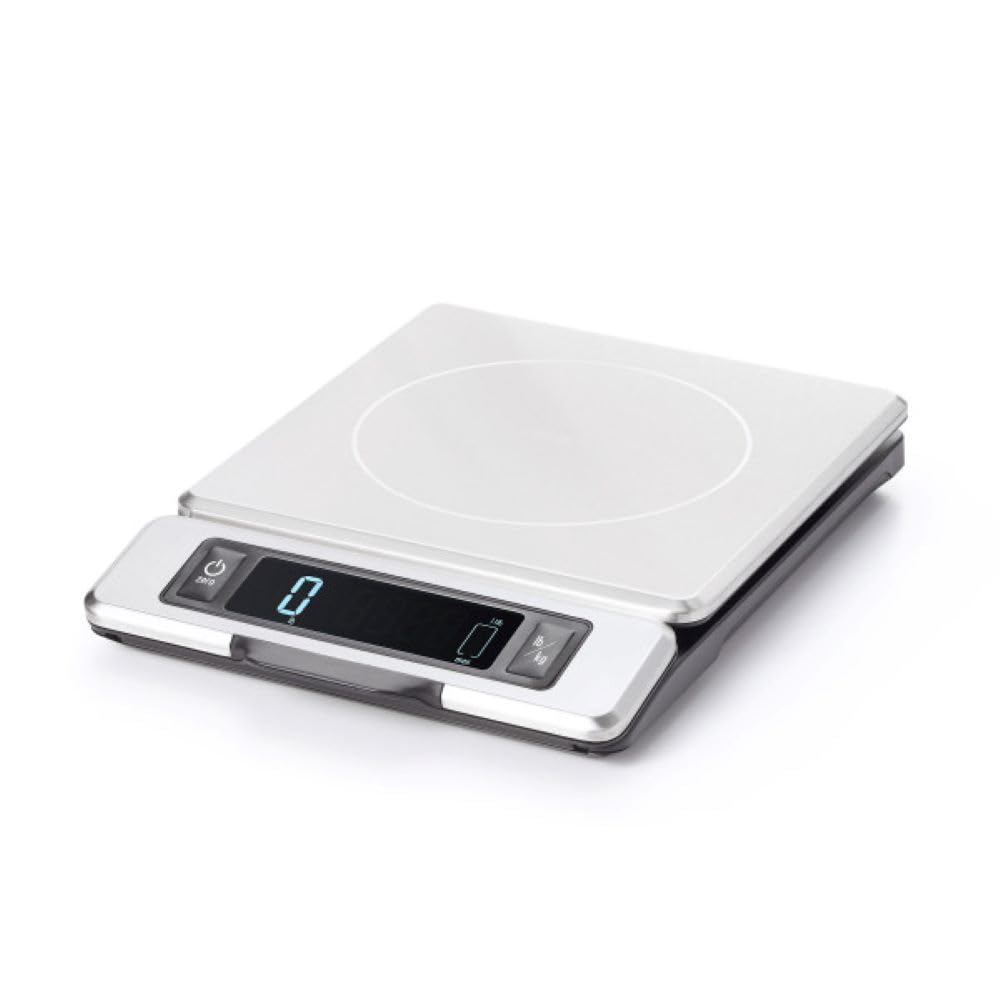
OXO Good Grips 11-Pound Stainless Steel Kitchen Scale
Precision measurements for perfect cake recipes every time. 1/8 oz precision with pull-out display.
Get Your Free Donut Recipe
Subscribe to our newsletter and get instant access to our signature donut recipe, plus weekly baking tips and troubleshooting guides.
Explore Our Full Kitchen
Discover all the tools and equipment we recommend for your baking journey.
Shop My KitchenMore from cakes
More articles coming soon in this category.